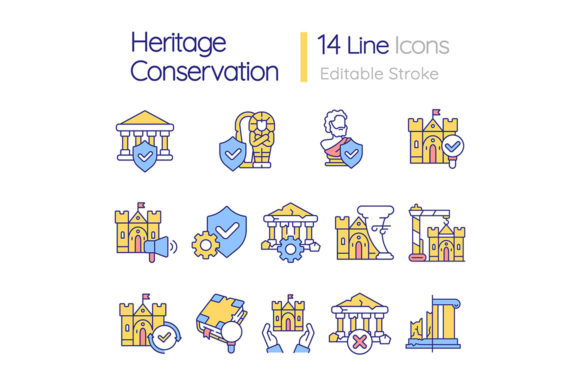
Heritage Conservation RGB Color Icons for Modern Web Design
A First Look at Heritage Conservation RGB Color Icons
When I first opened the Heritage Conservation RGB Color Icons set, I was immediately drawn to the clean and professional aesthetic of the design. These icons are a collection of isolated vector illustrations that feel both modern and timeless, making them ideal for editorial content that needs to reflect a sense of historical care and preservation.
The use of simple filled line drawings with editable strokes gives these icons a versatile quality that can be adapted to various publishing needs. The overall mood is educational yet approachable, which makes them particularly well-suited for niche content around cultural heritage, environmental conservation, and historical education.
Editorial Mood and Content Niche Compatibility
The Heritage Conservation RGB Color Icons exude a professional and slightly artistic vibe that aligns well with content focused on heritage, sustainability, and cultural awareness. They have a subtle elegance that supports educational or lifestyle-focused content without feeling overly formal or decorative.
These icons naturally fit into niches such as museum blogs, conservation organizations, eco-friendly initiatives, and digital guides related to history or archaeology. Their visual language feels informative yet visually engaging, helping to create a reader experience that is both trustworthy and aesthetically pleasing.
Real Publishing Applications and Use Cases
As a blog designer and digital publisher, I often look for graphic design assets that can enhance the visual hierarchy and branding of content. The Heritage Conservation RGB Color Icons offer several practical uses across different publishing platforms:
- Blog Featured Images: These icons can serve as focal points in featured images, helping to communicate the theme of a post quickly and effectively.
- Pinterest Graphics: Their clean and isolated style works beautifully in Pinterest pins, where visual clarity and appeal are essential for engagement.
- Article Headers: Used in article headers, they provide a consistent visual identity that reinforces the editorial tone of the content.
- Newsletter Banners: Incorporating these icons into newsletter headers or banners adds a touch of professionalism and thematic relevance.
- Category Thumbnails: For websites with multiple categories, these icons help users recognize sections at a glance.
- Social Media Previews: When used in social media previews, they improve click-through potential by adding visual interest.
Enhancing Content Performance with Visual Design
Using the right graphic design asset can significantly impact how readers perceive and interact with your content. The Heritage Conservation RGB Color Icons contribute to stronger first impressions and clearer visual hierarchy by providing a cohesive and polished look to web pages and digital resources.
They support better category recognition, improved brand identity, and more professional-looking content pages. This is especially important for affiliate marketing, content marketing, and small business branding, where visual consistency plays a key role in building trust with audiences.
By incorporating these icons into downloadable resources like digital guides, worksheets, and eBook covers, publishers can elevate the perceived value of their content while maintaining a strong visual identity.
Where These Icons Work Best
The Heritage Conservation RGB Color Icons shine in situations where visual clarity and thematic relevance are crucial. Here are some of the best places to use them:
- Hero Images: As part of a website header or hero section, they add a layer of thematic storytelling.
- Article Thumbnails: Perfect for thumbnails that need to convey the topic of an article quickly.
- Pinterest Pins: Their isolated nature and clean lines make them highly effective in Pinterest graphics.
- Blog Graphics: Ideal for infographics, sidebars, or visual accents within editorial layouts.
- Content Upgrades: Enhance lead magnets and content upgrades with a professional and relevant visual element.
- Downloadable Resources: Add a touch of polish to printables, media kits, and digital downloads.
- Social Media Previews: Improve engagement by using them in preview images for social media posts.
Where to Use with Caution
While these icons are versatile, there are certain contexts where they may not be the best fit. For example, they might not work well in small mobile thumbnails where detail can get lost. They also may not suit text-heavy blog images or layouts that require a very minimal visual system.
In serious professional niches or corporate content, a more subdued or minimalist design might be preferable. It’s important to consider the overall visual balance when integrating these icons into a larger editorial or web design scheme.
Practical Publisher Notes and Tips
Before using the Heritage Conservation RGB Color Icons in any real publishing project, I recommend testing them in different environments:
- Test on Desktop and Mobile Screens: Ensure they scale well and remain legible on all devices.
- Check Thumbnail Appearance: Preview how they look as thumbnails in blog feeds or Pinterest boards.
- Use in Real Blog Layouts: See how they integrate with existing content and color schemes.
- Test with Headline Text: Confirm that they complement your typography and don’t clash with headlines.
- Review Contrast and Readability: Make sure they stand out against background colors without overwhelming the content.
- Try in Black and White: Assess their effectiveness in monochrome formats for print or grayscale displays.
- Place Beside Different Fonts: Test them with serif, sans-serif, script, and display fonts to ensure compatibility.
- Check File Size: Optimize images for web performance without sacrificing quality.
- Confirm Commercial Licensing: Always verify that you have the right to use these icons on monetized sites, affiliate pages, or paid content products.
Whether you're creating a Canva template, a digital guide, or a printable design, the Heritage Conservation RGB Color Icons can help you achieve a more professional and cohesive visual identity. By thoughtfully integrating them into your content strategy, you can boost reader trust, improve brand recognition, and create more engaging editorial experiences for your audience.